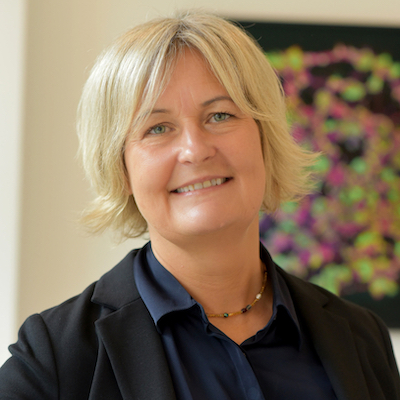
Hear Malin Parmar tell (in Swedish only) more in the video about how biological medicines open up new opportunities and how they can change care in the article on SVT Nyheter.
Source: SVT Nyheter | See the film at SVT Nyheter.
Hear Malin Parmar tell (in Swedish only) more in the video about how biological medicines open up new opportunities and how they can change care in the article on SVT Nyheter.
Source: SVT Nyheter | See the film at SVT Nyheter.
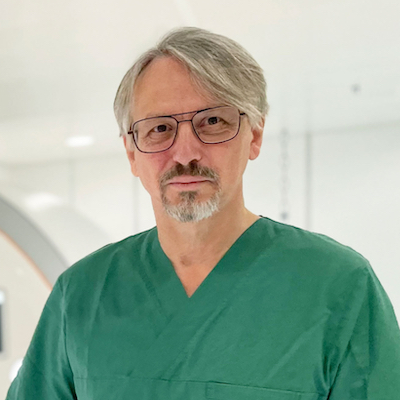
Hear ( in Swedish only) the neurosurgeon Hjálmar Bjartmarz tell about the difficult procedure when 7 million nerve cells must end up in the right place.
Source: SVT Nyheter |
Hear the doctors describe the procedure in the video and read the full article at SVT Nyheter.
Listen to Thomas Matsson (in Swedish only), who suffers from Parkinson’s disease and, as the first patient in the world, recently had lab-grown nerve cells injected into his brain. The cells that will replace the dopamine cells that have died.
Source: SVT Nyheter |
Read the full article and watch the video where patient Thomas tells more at SVT Nyheter.
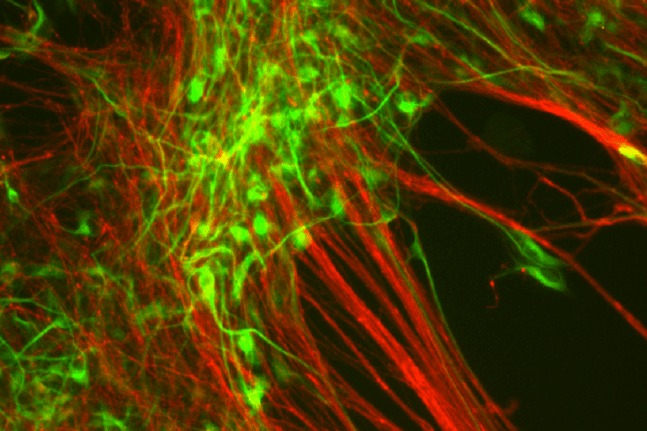
The STEM-PD trial, an investigational stem cell-based therapy for the treatment of Parkinson’s Disease, has been given regulatory approval for a Phase I/IIa clinical trial.
Source: Lund University | Read the full article at Lund University. |
Läs artikeln på svenska på Lund Universitet.

Hear Professor Malin Parmar tell (in Swedish only) more about the stem cell research that is currently being conducted at Lund University. This spring, the researchers hope to start testing the method on patients.
Source: SverigesRadio |
Listen to the radio program at SverigesRadio.
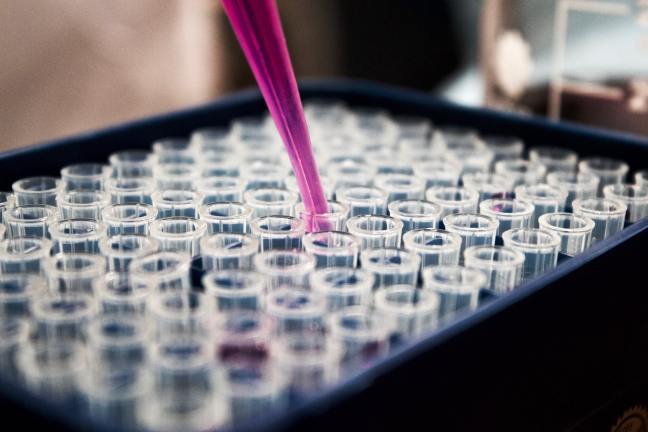
In this talk Roger discusses the history and current status of using cell based therapies to repair the brain in patients with Parkinson’s Disease (PD). This includes our own work with fetal dopamine cell therapies as well as our planned trial using stem cell derived dopamine neurons.
Text: Cambridge Neuroscience
Roger Barker is the Professor of Clinical Neuroscience at the University of Cambridge and Consultant Neurologist at the Addenbrooke’s Hospital Cambridge. He is a PI in the MRC -Wellcome Trust Stem Cell Institute in Cambridge and Director of the MRC funded UKRMP Stem and Engineered cell hub. His research seeks to better define the clinical heterogeneity of two common neurodegenerative disorders of the CNS – namely Parkinson’s (PD) and Huntington’s disease (HD).
The Cambridge Neuroscience Interdisciplinary Seminar series is open to both members of the University, external academics and members of the public. We have tried to reflect the diversity of people’s interests at the University with our programme, and the breadth of the research taking place in Cambridge. Registration and more details on the series are available here: http://talks.cam.ac.uk/show/index/125…
For more information on Cambridge Neuroscience, please see http://www.neuroscience.cam.ac.uk or follow us on Twitter @CamNeuro
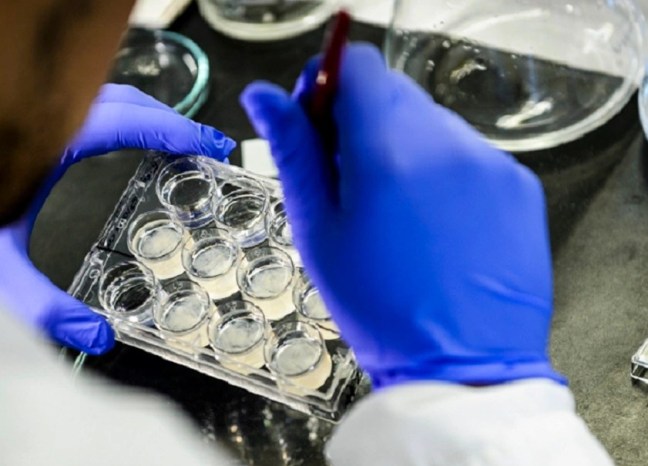
Cure Parkinson’s sponsored the G-Force PD Seminar in 2019. Created in 2014 the seminar brings together a group of researchers working around stem cell based therapies for Parkinson’s to better harmonise the work between the different consortia and bring this treatment forward to the clinic.
Text: Cure Parkinson’s
Each of the G-Force teams, based in Europe, the US and Japan is establishing reproducible and scalable protocols for the production of dopamine replacement stem cells that meet ‘Good Manufacturing Practice’ (GMP) standards. GForce-PD is continually tackling important open questions around stem cell therapies for Parkinson’s.
Read the full article at CURE PARKINSON’S.
Stem cell pioneer Professor Roger Barker, PhD, Professor of Clinical Neuroscience and Honorary Consultant in Neurology at the University of Cambridge and at Addenbrooke’s Hospital joins us for an informative discussion. Professor Barker and his team at the Barker/Williams-Gray Lab are leading in clinical and lab-based research on Parkinson’s and Huntington’s disease focused on determining what causes these diseases and how to improve the lives of patients living with them. We talk with Professor Barker about the past, present and future of cell therapies for Parkinson’s disease, and what it all means for people living with the disease today. Parkinson & Movement Disorder Alliance is a nonprofit organization providing people with Parkinson’s and other movement disorders as well as their care partners opportunities to learn, live life more fully and connect with other. We believe you are MORE than a disease!
Parkinson’s Disease is one of the major neurodegenerative conditions. Cells die, for reasons not fully understood, causing a reduction in the production of the neurotransmitter, dopamine, and a raft of physical and behavioural problems.
BBC World Service | Discovery
Although effective drug treatments are available, they wear off over time and have side effects. The highly individual nature of the condition and variation in its progression also makes dosage difficult. Sue Broom reports on two new approaches that could lead to treatments for Parkinson’s. One potential therapy is to replace the dying cells with new ones. This was tried several decades ago but the results were not promising. The new Transeuro trial of cell therapy hopes to lead to better outcomes. The second approach is to use stem cells. Sue Broom talks to the doctors and patients involved in these trials.
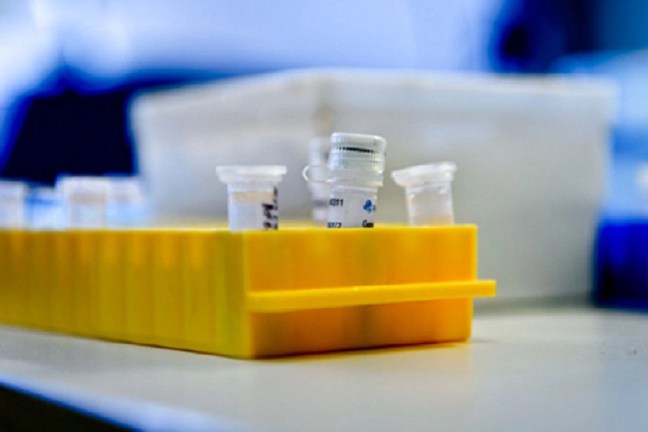
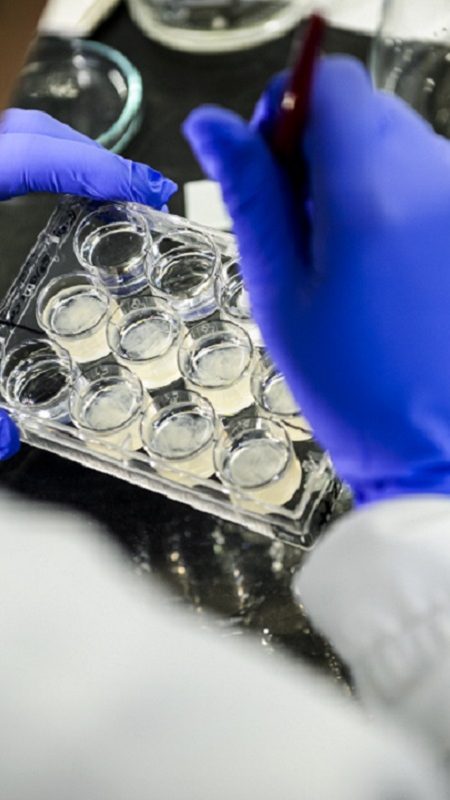
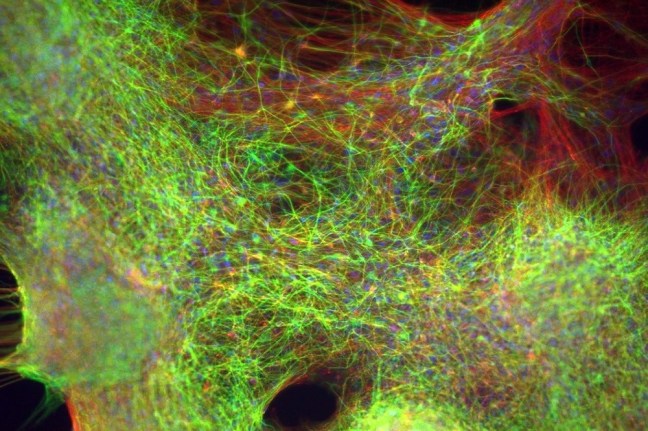
A major breakthrough in the development of stem cell-derived brain cells has put researchers on a firm path towards the first ever stem cell transplantations in people with Parkinson’s disease. A new study presents the next generation of transplantable dopamine neurons produced from stem cells. These cells carry the same properties as the dopamine neurons found in the human brain.
Text: Lund Unversity | Läs artikeln på svenska på Lund Universitet.
The experiments, performed in rat models of Parkinson’s disease, reveal that the latest version of stem cell-derived dopamine cells fully mimic the characteristics and function of the dopamine neurons that are lost in Parkinson’s disease. The potentially unlimited supply of transplantable cells, sourced from stem cell lines, opens the door to clinical application on a much broader scale. The results are published in the leading journal in the field, Cell Stem Cell.
”This study shows that we can now produce fully functioning dopamine neurons from stem cells. These cells have the same ability as the brain’s normal dopamine cells to not only reach but also to connect to their target area over longer distances. This has been our goal for some time, and the next step is to produce the same cells under the necessary regulations for human use. Our hope is that they are ready for clinical studies in about three years”, says Malin Parmar, who led the study conducted at Lund University and at MIRCen in Paris as part of the EU networks NeuroStemCell and NeuroStemcellRepair.
Brain cell transplants with fetal dopamine cells obtained from human embryos have already been performed on a few occasions, with varying results. In the past decade, the EU network TRANSEURO has been working hard to get a new and improved trial underway. That moment is now here. In the coming months a small number of patients will be transplanted with fetal cells in Lund, Sweden and Cambridge, UK.
The fetal dopamine cells that will be used within TRANSEURO, however, carry some restrictions. Firstly, there is the ethical concern of taking tissue from aborted fetuses. There is also the issue of availability of fetal cells, which is often scarce. The logistics surrounding the gathering of cells for any specific transplantation is partly down to luck and circumstance. These concerns will be resolved as the stem cell-derived dopamine cells become available in the clinic, making the treatment accessible for larger patient groups.
The collaborative efforts within EU networks NeuroStemcellRepair and TRANSEURO have put cell therapy on a faster track towards reaching patients. Getting stem cells to become functioning dopamine neurons, the method of delivering them to a specific target, and learning how to get them to integrate in the brain, are all extremely complicated processes. The sharing of ideas and data has been integral to the success of these networks, explains Professor Elena Cattaneo, coordinator for NeuroStemcellRepair.
”Collaborative research of this nature is so much more than the results it produces, especially if we consider its potential for expanding the boundaries of knowledge and dissolving cultural barriers. From this perspective, basic research and collaboration among nations stand out once more as something the scientific community should never distance itself from”.
Read the full article at Lund University.
 The STEM-PD Clinical Trial