STEM-PD announces first in-human clinical trial results for Parkinson cell therapy

Transplanting stem-cell derived dopamine progenitor cells into the brain to treat Parkinson’s disease has shown to be feasible in the STEM-PD trial. Eight patients were transplanted in this first in human clinical trial, and no serious side effects linked to the transplanted cells were seen during the first year of follow‑up. 

Read the paper online here: Human embryonic stem cell-derived dopaminergic cells for Parkinson’s disease: a phase 1/2 open-label trial | Nature Medicine


In Parkinson’s disease, patients lose nerve cells in the brain that produce dopamine which leads to symptoms such as slowness of movement, stiffness, gait disturbance and tremor. The current treatments are medications that replace the lost dopamine, but over time these medications often become less effective and cause side effects.

The therapy tested in the current trial aims to replace the cells that produce dopamine through transplantation of a stem cell-based dopamine nerve cell product to the brain, and the goal is that after being transplanted, they will mature into new dopamine-producing nerve cells in the brain.

Dopamine neurons grown in 3D in culture
Credit: Parmar lab, Lund University, Sweden
A transplanted dopamine neuron that has matured and is now functioning in vivo in a pre-clinical model of Parkinson’s Disease
Credit: Parmar lab, Lund University, Sweden

“The possibility of replacing dopamine neurons that are lost in Parkinson’s disease has been a long-standing goal in the field,” said Malin Parmar, Professor of Cellular Neuroscience at Lund University, Sweden, and lead of the STEM-PD program. “The findings represent an important milestone for regenerative medicine approaches in Parkinson’s disease and support continued clinical development of stem cell-based therapies.”

Eight individuals with Parkinson’s disease received the transplanted cell product at two different doses, followed by 12 months of immunosuppression to prevent graft rejection. Seven participants completed 12-month follow-up; one participant died from a pulmonary infection that was not directly related to the cell product. The surgical procedure was generally well tolerated and no graft-induced involuntary movements were observed in the transplanted participants. Clinically, patients remained stable. Imaging using dopamine PET scans provided early indications of graft survival at both 6 and 12 months post-transplantation. Six of the seven participants substantially reduced their dopaminergic medication, a result that will be evaluated over time.

“This represents an exciting new departure on repairing the brain of individuals with Parkinson’s using dopamine cells- an approach pioneered in Lund some 40 years ago using fetal dopamine cells. The STEM-PD trial harnessing the expertise of scientists and clinicians from Lund and Cambridge has enabled us to undertake and deliver on one of the first ever stem cell-derived dopamine cell therapies for patients with Parkinson’s and we hope this will be the beginning of an exciting new programme that may ultimately benefit the wider Parkinson’s community” says Roger Barker, clinical lead of STEM-PD and clinical PI at the UK site.

“Reaching this primary endpoint and being able to show that the cell product is safe is a great achievement for this trial, our team, the participating patients but also for all patients suffering from Parkinson’s disease. We are hopeful that the early signs of cell survival and clinical improvement we observe will continue to increase over the time and excited to continue the development of this cell therapy”, says Gesine Paul-Visse, Professor in Neuropsychiatric Research and Lead PI at Skåne University Hospital, the Swedish clinical site where all patients were treated.

STEM-PD builds on decades of research in dopamine cell replacement therapy for Parkinson’s Disease at Lund University and pioneering work in translation of pluripotent stem cell technology from experimental studies into clinical evaluation. The therapy consists of dopaminergic neuron progenitors derived from human embryonic stem cells that mature into dopamine-producing neurons following transplantation into the brain. The STEM-PD trial is the first pluripotent stem cell trial approved in Sweden and the first for Parkinson’s Disease in Europe.

“The initiation and execution of this clinical trial have only been possible through close collaboration between scientists, clinicians, GMP manufacturing teams, regulatory experts and, most importantly, the participating patients,” concludes Malin Parmar.

Dopamine neurons maturing in cell culture
Credit: Parmar lab, Lund University, Sweden

The STEM-PD research team will now continue the long-term follow-up of the participants to further evaluate safety, graft function, and clinical benefit.


Read the paper online here: Human embryonic stem cell-derived dopaminergic cells for Parkinson’s disease: a phase 1/2 open-label trial | Nature Medicine

STEM-PD investigators publish a book chapter in the International Review of Movement Disorders

STEM-PD investigators, Gesine Paul and Agnete Kirkeby, alongside researchers from Kyoto and the BlueRock Therapeutics have recently published a book chapter summarising the current ongoing clinical trials using dopamine cell replacement in Parkinson’s and the respective cell sources used in these clinical trials.

In this chapter, the authors discuss cell therapies for Parkinson’s disease (PD) as an exciting and promising treatment option in clinical trials, showing early signs of safety and effectiveness. Although these trials are still in the early phases, they offer valuable lessons to improve future designs and optimize future potential cell products. The authors also describe the challenges that remain, such as the need for immunosuppression.

The authors consider the efforts that are underway to overcome certain challenges, such as the need for immunosuppression by creating hypoimmune universal cell lines that can evade the immune system and improve graft survival, along with better methods for producing and scaling cell products.

This chapter is an interesting read for anyone who is interested in the field of dopamine cell replacement therapy for PD. You can read the fulll chapter blow:


Full article: https://doi.org/10.1016/bs.irmvd.2024.08.004

This chapter was published in International Review of Movement Disorders, Vol 7,  Gesine Paul, Asuka Morizane, Agnete Kirkeby, Jun Takahashi, Claire Henchcliffe, Chapter Ten – The future: Stem cells? Current clinical trials using stem cells for dopaminergic cell replacement, Page 191-220, Copyright Elsevier (2024)

The Global Impact of Pluripotent Stem Cell Clinical Trials

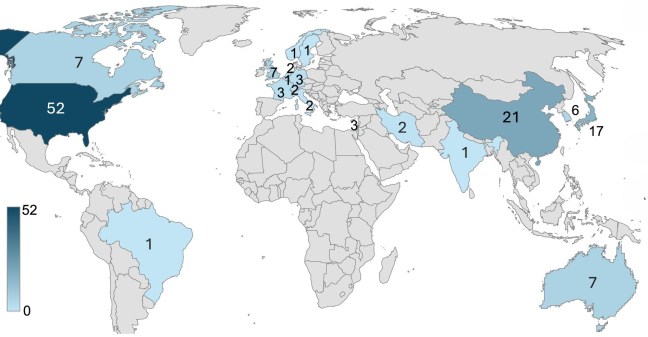
A team led by Associate Professor Agnete Kirkeby has published a review in Cell Stem Cell summarizing clinical trials using human pluripotent stem cells (hPSCs), which can self-renew and transform into any human cell type. Over 1,200 patients across 116 trials have received these treatments, targeting conditions like Parkinson’s, blindness, diabetes, and cancer. The review provides the first comprehensive data on patient numbers, cell doses, and immunosuppression strategies, essential for ensuring the safety of such therapies. No major safety concerns, like tumour formation, have been reported. This work is expected to be a valuable resource for advancing stem cell research worldwide.


Read the full review here: Cell Stem Cell. 2025 Jan 2;32(1):10-37. doi: 10.1016/j.stem.2024.12.005.

Stem Cells Enter the Clinic: A New Era for Regenerative Medicine

With over 100 clinical trials underway, stem cells are being tested as potential treatments for conditions like cancer, diabetes, and Parkinson’s disease. This marks a pivotal moment for regenerative medicine, a field that has faced significant ethical and political challenges in the past.


Read the full article at nature.com.

Source: Nature 637, 18-20 (2025), doi: https://doi.org/10.1038/d41586-024-04160-0

Image copyright: Åsa Sjöström for Nature

Tributes to Professor Debi Roberson

Emeritus Professor Debi Roberson, a trailblazing psychologist and artist, passed away peacefully on December 1, 2024. Debi’s academic journey began as a mature student at the University of Essex, where she became the first to earn a 1st in Psychology and later rose to Professor. Her groundbreaking research into color perception and language, conducted in remote regions like Papua New Guinea, earned her international acclaim, including a Nature publication and the BPS Cognitive Psychology Award. Despite being diagnosed with Parkinson’s Disease, she remained a pioneer, participating in one of the first stem cell replacement trials. Beyond academia, Debi lived a vibrant, adventurous life, embracing roles in art, travel, and community service. She will be deeply missed by all who knew her.


Tributes to Debi can be read in full at the following address: https://www.essex.ac.uk/blog/posts/2024/12/18/tributes-to-professor-debi-roberson

Trial update

It is with great regret that we report the death of a patient in the STEM PD trial. The death was caused by an opportunistic infection which was possibly related to the immunosuppressive treatment the patient was taking. An increased risk of invasive infection is a recognized but uncommon complication of immunosuppression. Despite prophylactic measures and intensive treatment, the patient unfortunately succumbed to the infection. 

This event is unrelated to the STEM-PD cell product or the surgical implantation of the cells. The study team completed transplantation of all patients in the STEM-PD trial in October 2024 and will continue to monitor the patients closely.